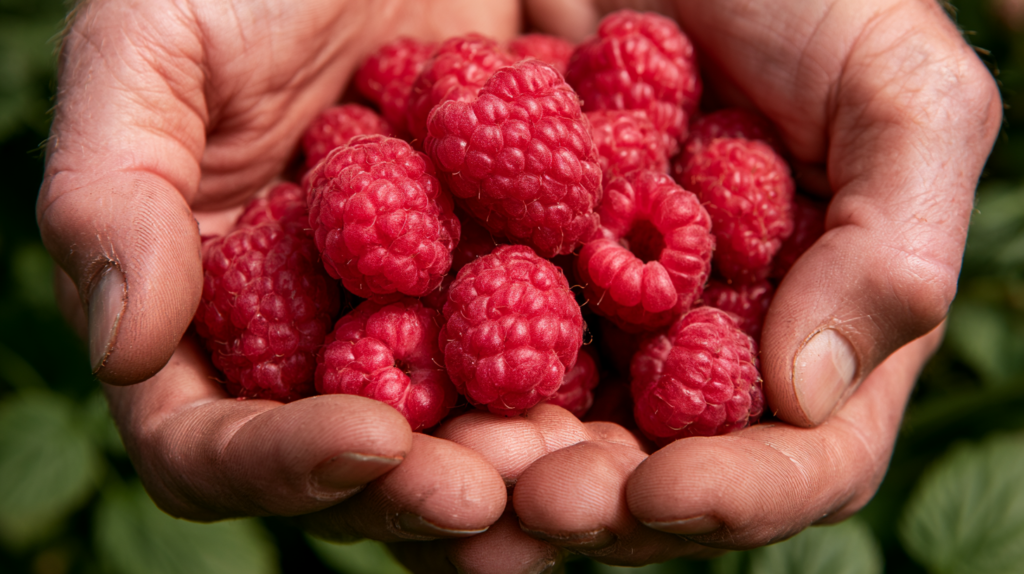
Scientists at the James Hutton Institute are developing stronger, more sustainable soft-fruit varieties designed to help growers withstand climate volatility while meeting exacting consumer and retail demands.

Scotland’s world-renowned berry industry is looking to plant breeding for protection against an increasingly unpredictable climate, rising production costs and pressure to reduce agricultural inputs.
At the forefront of that work is the James Hutton Institute in Invergowrie, where researchers and breeders are developing soft-fruit varieties capable of combining commercial performance with greater resilience to environmental stress, pests and disease.
The institute and its predecessors have been breeding and trialling soft fruit for almost 75 years. More than 40 varieties have been developed across crops including raspberries, blackberries, blackcurrants, blueberries, redcurrants, gooseberries, tayberries and honeyberries.
The programme is focused not simply on producing fruit that can survive more challenging conditions, but on delivering the complete package required by growers, retailers and consumers: reliable yields, strong flavour, attractive appearance, easier harvesting, longer shelf life and lower-input production.
Modern techniques such as marker-assisted breeding are helping researchers identify desirable characteristics earlier, shortening the path towards commercially viable cultivars. The institute’s soft-fruit genetics work also uses advanced plant imaging and other phenotyping technologies to examine how different varieties respond to environmental pressures.
A major recent achievement is Highland Charm, the first blueberry bred in Scotland. Developed following a decade of research and more than 300 crosses, the variety was selected for its ability to perform in Scottish growing conditions.
Trials have shown Highland Charm to combine high yields and strong fruit size with a balanced flavour, satisfying texture and impressive shelf life. It has also performed consistently across multiple seasons and in trials in both the UK and EU. Researchers are continuing to assess the variety under different production systems, including reduced-input growing.
The wider breeding programme is also targeting traits that could help growers reduce pesticide use and manage production more efficiently. These include resistance to pests and diseases, improved climate adaptation and the ability to deliver dependable crops while using fewer resources.
That work is becoming increasingly important as extreme temperatures, drought, heavy rainfall and shifting pest and disease pressures create new risks for growers.
Scotland’s cooler summer temperatures, fertile soils and water resources continue to offer considerable advantages for premium berry production. However, maintaining that position will depend on varieties capable of performing reliably as conditions change.
By combining Scotland’s berry-growing heritage with modern genetics and breeding technology, the James Hutton Institute is helping to equip growers with fruit designed not only for today’s marketplace, but for the considerably tougher growing environment ahead.