
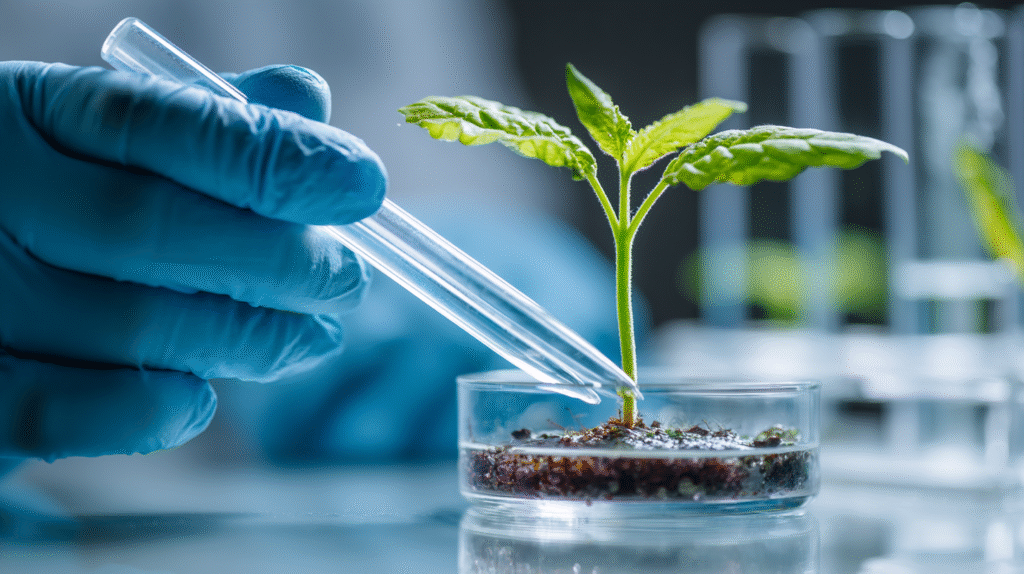
The UK government have been urged to ensure that progress on gene editing is not compromised as negotiations continue on improving trade relations with the European Union.
The warning was delivered by NFU president Tom Bradshaw, who told MPs that the UK must protect its ability to innovate in agricultural technology — particularly in areas where it now diverges from EU regulation — as part of any future sanitary and phytosanitary (SPS) agreement aimed at reducing trade friction.
Bradshaw appeared before the Business and Trade Select Committee, where he argued that gene editing and plant protection products represent two key areas where the UK has the potential to become globally competitive if it preserves regulatory freedom. He said the country should aim to become a world leader in these technologies and should not “trade away” that advantage in exchange for easier market access.
The NFU is lobbying for a specific exemption — or “carve-out” — for UK gene editing legislation within any future SPS agreement. Bradshaw told MPs that failing to secure such protections early in negotiations could make it difficult to achieve them later.
While acknowledging the benefits of reducing border checks and easing trade barriers with the EU, Bradshaw warned that dynamic alignment with EU rules could restrict the UK’s ability to innovate. He said improvements in cross-border trade should not come at the expense of the UK’s capacity to develop and deploy new technologies.
He also argued that without a carve-out for gene editing, the EU itself could lose access to UK research progress in the field if it continues to restrict the use of the technology.
The NFU’s comments come amid wider debate over how far the UK should align with EU food and agricultural regulation as part of a broader “reset” in relations. Since Brexit, Great Britain has operated its own SPS regime, while Northern Ireland remains aligned with EU rules under the Windsor Framework. Routine checks on some goods moving between Great Britain and the EU have added cost and complexity across parts of the food and farming supply chain.
Bradshaw told MPs that easing friction at the border would benefit both sides, and highlighted the impact of border disruption on horticultural businesses trying to import plant material.
The NFU has positioned gene editing as central to the future of resilient and sustainable food production, and has warned that weakening the UK’s regulatory approach could undermine investment and research at a time when farm businesses are under pressure to improve productivity while cutting environmental impact.
