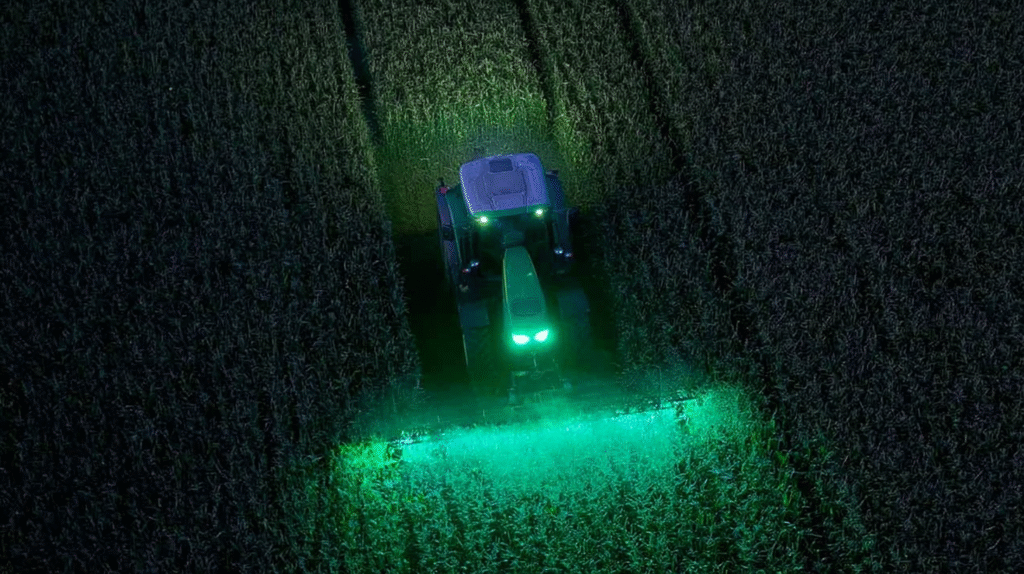
There is no shortage of innovation flowing into modern agriculture. From robotics and autonomous machinery to livestock monitoring systems, AI-driven analytics and precision application tools, the pace of agritech development is accelerating rapidly.
But despite the constant stream of new ideas entering the market, many farmers remain understandably cautious.
The reason is simple: growers and producers do not adopt technology because it is fashionable. They adopt it because it works reliably, integrates into existing systems and delivers a measurable commercial return.
That gap between innovation and practical implementation remains one of the sector’s biggest challenges.
According to the UK Agri-Tech Centre, too many promising technologies still fail to make the transition from concept to widespread on-farm adoption. While some solutions perform well in controlled environments or small-scale trials, they often struggle when exposed to the pressures, unpredictability and operational realities of commercial farming.
At a time when growers are facing volatile markets, labour pressures, climate uncertainty and tightening margins, there is little appetite for investing in technology that has not been thoroughly validated under real farming conditions.
The issue, industry leaders argue, is not a shortage of innovation — it is a shortage of confidence.
Steve McLean, chief executive of the UK Agri-Tech Centre, said the focus now needs to shift away from invention alone and towards practical adoption.
“Farmers don’t need more ideas — they need solutions that work in the real world,” he said.
“Our role is to help businesses prove their technology in practical conditions, build commercial confidence and then scale it into the market. That’s what drives real adoption.”
To address this challenge, the Centre works with agritech companies looking to demonstrate their technologies across commercial farming systems. Through a network of more than 40 farms, specialist facilities and innovation hubs across the UK, businesses are able to trial and refine products under genuine operational conditions.
The emphasis is not simply on showcasing technology, but on independently validating whether it can consistently deliver value, reliability and return on investment.
Trials span multiple sectors, including commercial beef and dairy production, controlled environment agriculture, aquaculture and arable farming systems. Farmers themselves also play an active role in shaping and stress-testing new solutions to ensure they remain practical and commercially viable.
That real-world testing is becoming increasingly important as governments and investors continue pouring funding into agricultural innovation.
In April, the UK government announced a £50 million package designed to accelerate the rollout of agritech solutions across British farming. The funding supports projects involving robotics, artificial intelligence, biological crop protection and forestry innovation, with ministers positioning agritech as a key driver of productivity and resilience.
Yet questions remain over whether all this investment will successfully translate into meaningful improvements at farm level.
Recent industry commentary has highlighted concerns that some innovation funding still prioritises high-level technological ambition over practical commercial outcomes. In several cases, growers argue promising ideas struggle to progress beyond pilot stages or fail to generate measurable productivity gains once deployed at scale.
That concern is particularly acute as agriculture increasingly embraces the principles of so-called “Agriculture 4.0” — a model built around artificial intelligence, automation, sensors, drones and interconnected data systems. Researchers suggest these technologies could help improve efficiency, reduce waste and strengthen sustainability, but only if implementation is practical, reliable and economically accessible for producers.
Examples of technologies already beginning to show practical value include precision livestock systems capable of identifying health and welfare issues earlier, automation tools helping growers manage labour shortages, and controlled-environment technologies improving production consistency.
The wider industry increasingly agrees that success will depend not on how sophisticated the technology appears, but on whether it can repeatedly deliver tangible benefits in the field.
For farmers, those benefits are straightforward: lower input costs, improved labour efficiency, enhanced crop performance, better animal welfare and stronger long-term resilience.
But the sector is also recognising that innovation alone is not enough. Commercialisation, supply chain integration and farmer confidence are becoming just as important as technical capability.
As the agritech sector continues to mature, the challenge ahead may not be inventing the next breakthrough solution — but ensuring innovation consistently survives the journey from laboratory concept to trusted on-farm tool.