
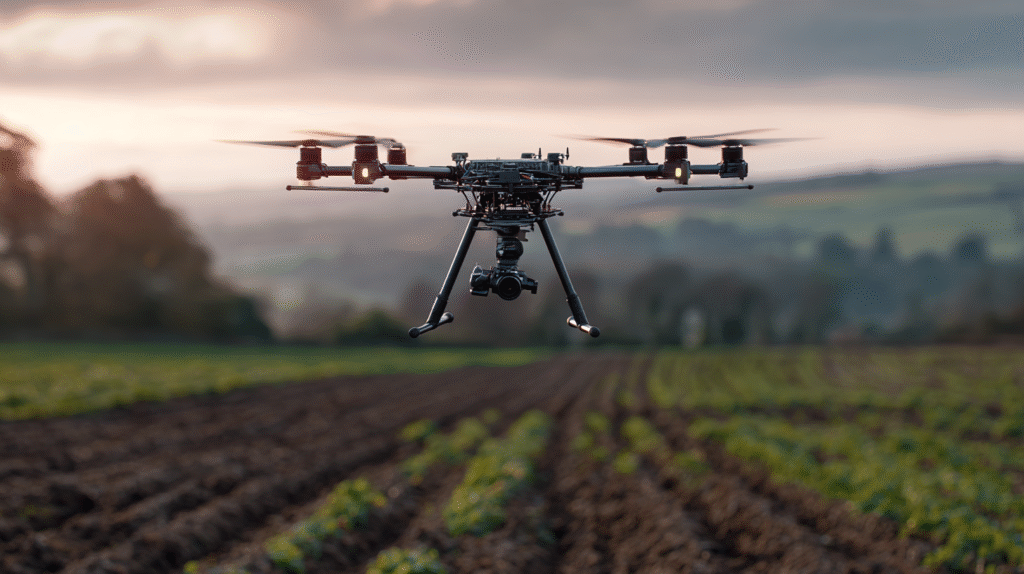
Artificial intelligence is already transforming agriculture — and before you panic about robots taking over the countryside, let’s set the record straight: the machines aren’t here to replace farmers. What is happening, however, is nothing short of a structural shift in who does what on the farm and who bears the risks when technology misfires.
The global push for more food with fewer resources has made AI a hot topic in agri-tech circles. Between projected population growth and changing diets, food demand is expected to climb significantly by 2050, and farmers are under mounting pressure to produce more with less. In this context, AI is being championed as a productivity booster — but it’s essential to understand its real role.
AI Augments, It Doesn’t Replace
Agriculture isn’t a tidy, predictable factory setting where robots can easily take over. It’s a dynamic, biological system influenced by soil types, weather patterns, pests, and animal behaviour. Because of that complexity, AI in farming today tends to automate specific tasks rather than entire jobs.
Modern AI tools are great at crunching data, spotting patterns and offering insights. Think satellite imagery highlighting crop stress, algorithms predicting irrigation needs or sensors detecting early signs of disease. Crucially, these systems support human decision-making — farmers and farm workers still interpret results and decide what comes next.
This isn’t new, of course. Mechanisation — from GPS-guided tractors to automated milking systems — has been reshaping farm work for generations. AI represents the next wave, not a radical break from the past.
Jobs Don’t Disappear — They Evolve
Research consistently shows that advanced tech changes how work is done more than it eliminates the need for human effort entirely. Rather than making farmers obsolete, AI is shifting demand toward higher-value skills like data interpretation, technology oversight and strategic decision-making.
In markets like the United States, advanced technologies such as automatic steering are already more common on larger operations, yet they supplement rather than replace farm operators. That trend is echoed globally.
However, this doesn’t happen evenly. Smaller producers often lag in technology adoption, and labour shortages persist in many regions. This uneven uptake means that the benefits and risks of AI aren’t shared equally across the sector.
Who Bears The Risk?
Here’s where the conversation gets more subtle — and more important. While AI may not be wiping out jobs en masse, it is changing who bears responsibility when things go wrong.
Traditional farming risks — weather vagaries, pest outbreaks, market swings — are familiar. But when an AI model misreads data or a sensor system fails to detect disease, questions arise: who is accountable? The farm? The tech provider? The data scientist who built the model? Risk governance becomes less straightforward in an AI-driven world — and that matters for insurers, policymakers and farmers alike.
This shift in risk profile isn’t just academic. It affects investment decisions, farm viability, and ultimately, food security. As AI tools proliferate, mechanisms to manage these new forms of risk — from contractual protections to ethical data use standards — will be essential.
A Future Where People And Machines Thrive
The AI revolution in agriculture isn’t about robots supplanting people — it’s about equipping farmers with tools that amplify what they already do best. The technology’s greatest promise lies not in replacing expertise, but in enhancing it: helping farmers make better decisions, manage resources more efficiently, and adapt to a rapidly changing environmental and economic landscape.
That said, realising this promise will require thoughtful deployment. Access to digital tools needs to be equitable, skills training must keep pace with innovation, and risk frameworks must evolve to match the complexity of AI-assisted farming. The future of agriculture isn’t automated — it’s augmented. And with careful stewardship, that future could be more productive, resilient and rewarding for farmers around the world.
